Integrating Gen AI into Dart: A Beginner’s Approach

This beginner-friendly guide walks you through the process of integrating generative AI (Gen AI) into Dart. You’ll explore the essential tools, key components, and practical steps to set up your environment, connect AI models, and enhance your applications with AI capabilities. Whether you’re a developer new to AI or Dart, this guide will provide you with a solid foundation to kickstart your journey.

Table of Contents

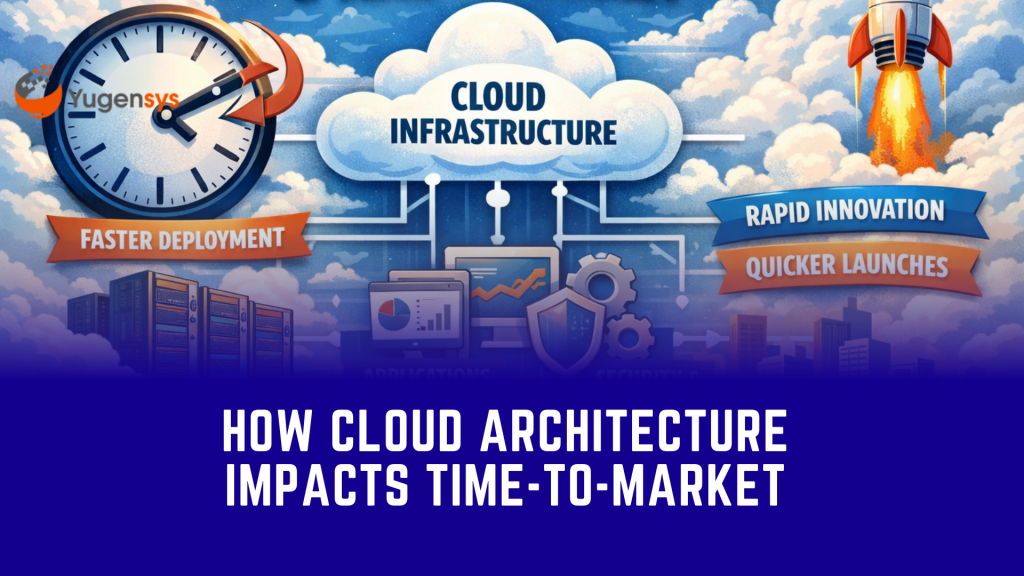
Time-to-market is often framed as a delivery issue. For leadership, it is more so an architecture decision.

Organizations slow down when platforms are hard to change, releases require leadership sign-off at every step, or early design choices limit later decisions. In these situations, speed is limited not by execution effort, but by the cost of change. Cloud architecture affects time-to-market by lowering that cost and allowing business priorities to be acted on without structural delays.

Reducing the Cost of Change Through Cloud Foundations

When cloud foundations are designed with intent, releases shift from infrequent, high-risk events to smaller, predictable updates. Changes can be introduced without reworking core systems, which gives leadership clearer timelines and the ability to respond to market or customer signals without disrupting ongoing operations.

Architecture-Driven Risk Management

Cloud architecture also reshapes how risk is managed. Performance, scalability, and reliability issues are identified earlier in the lifecycle, when they can be resolved without last-minute trade-offs. This reduces late-stage surprises and makes launches more controlled, rather than compressed under pressure.

Consistency at Scale as a Leadership Requirement

As organizations scale, speed alone is insufficient. Consistency becomes a leadership requirement. Cloud-based platforms enable common delivery patterns across teams and regions, reducing dependency on individual execution styles. For CXOs, this translates into greater predictability across initiatives, better portfolio-level planning, and fewer delivery escalations.

Observations from Yugensys in Practice

In practice, Yugensys has seen time-to-market improve when architectural choices are made with business outcomes in mind, not treated as mere implementation. Across product launches and modernization programs, this has typically resulted in:

1) Platforms structured to validate direction early, allowing leadership teams to confirm priorities before committing significant time or capital
2) Existing systems updated in specific high-impact areas, so releases become faster and more predictable without disrupting stable operations
3) Cloud foundations built to support growth when it occurs, rather than forcing premature investment

Alignment Over Urgency

Cloud architecture does not guarantee speed. But when aligned with business priorities, it removes many of the reasons products fail to reach the market on time.

At Yugensys, this alignment is treated as a discipline – one that helps leadership teams move with confidence, not urgency.

Our Services

Book a Meeting with the Experts at Yugensys


Conclusion: Architecture as a Strategic Enabler

Ultimately, time-to-market improves when architecture, delivery, and leadership intent move in the same direction. Cloud decisions made in isolation may modernize systems, but decisions made in alignment with business priorities create momentum that sustains growth.

This is where architecture stops being a technical concern and becomes a strategic lever—enabling organizations to act decisively, adapt continuously, and bring products to market with clarity and control.

Picture of Vaishakhi Panchmatia

Vaishakhi Panchmatia

As the Tech Co-Founder at Yugensys, I’m driven by a deep belief that technology is most powerful when it creates real, measurable impact. At Yugensys, I lead our efforts in engineering intelligence into every layer of software development — from concept to code, and from data to decision. With a focus on AI-driven innovation, product engineering, and digital transformation, my work revolves around helping global enterprises and startups accelerate growth through technology that truly performs. Over the years, I’ve had the privilege of building and scaling teams that don’t just develop products — they craft solutions with purpose, precision, and performance.Our mission is simple yet bold: to turn ideas into intelligent systems that shape the future. If you’re looking to extend your engineering capabilities or explore how AI and modern software architecture can amplify your business outcomes, let’s connect.At Yugensys, we build technology that doesn’t just adapt to change — it drives it.

Subscrible For Weekly Industry Updates and Yugensys Expert written Blogs


More blogs from Artificial Intelligence

Delve into the transformative world of Artificial Intelligence, where machines are designed to think, learn, and make decisions like humans. This category covers topics ranging from intelligent agents and natural language processing to computer vision and generative AI. Learn about real-world applications, cutting-edge research, and tools driving innovation in industries such as healthcare, finance, and automation.


Integrating Gen AI into Dart: A Beginner’s Approach

This beginner-friendly guide walks you through the process of integrating generative AI (Gen AI) into Dart. You’ll explore the essential tools, key components, and practical steps to set up your environment, connect AI models, and enhance your applications with AI capabilities. Whether you’re a developer new to AI or Dart, this guide will provide you with a solid foundation to kickstart your journey.

Table of Contents

In today’s rapidly evolving tech landscape, the fusion of artificial intelligence (AI) and programming languages opens up new vistas of possibilities. Dart, known for its efficiency and versatility, stands at the forefront of this revolution. Combining Dart with powerful AI models like Gemini propels us into realms where creativity and innovation thrive.

In this blog post, we embark on a journey to integrate the Gemini model, a cutting-edge AI model developed by Google, with Dart, Google’s open-source, client-optimized programming language. We’ll delve into a Proof of Concept (POC) that illustrates how seamlessly Dart can harness the power of Gemini to generate content, spark creativity, and enhance user experiences.

Understanding the Codebase

Let’s dissect the Dart code snippet that orchestrates the integration with the Gemini model:

Initializing the Gemini Model

The initializeGenerativeModel function initializes the Gemini model with specified configuration settings, including maximum output tokens, temperature, top-p, and top-k values. Additionally, it sets safety settings to ensure that the generated content adheres to community guidelines and filters out harmful material.

import ‘package:google_generative_ai/google_generative_ai.dart’;

GenerativeModel initializeGenerativeModel(String apiKey) {
  // Configuration settings for content generation
  final generationConfig = GenerationConfig(
    maxOutputTokens: 4096,
    temperature: 0.5,
    topP: 0.9,
    topK: 10,
  );

  // Safety settings to filter out harmful content
  final safetySettings = [
    SafetySetting(HarmCategory.harassment, HarmBlockThreshold.high),
    SafetySetting(HarmCategory.hateSpeech, HarmBlockThreshold.high),
    SafetySetting(HarmCategory.sexuallyExplicit, HarmBlockThreshold.high),
    SafetySetting(HarmCategory.hateSpeech, HarmBlockThreshold.high),
    SafetySetting(HarmCategory.dangerousContent, HarmBlockThreshold.high),
  ];

  // Initializing the Gemini model
  final generativeModel = GenerativeModel(
    model: ‘gemini-1.0-pro’,
    apiKey: apiKey,
    generationConfig: generationConfig,
    safetySettings: safetySettings,
  );

  return generativeModel;
}

Generating Word Counts

The generateWordCount function dynamically generates word counts based on the difficulty level selected by the user. It adjusts the distribution of easy, hard, and difficult words accordingly, ensuring a balanced and challenging experience.

Map<String, dynamic> generateWordCounts(int level) {
  var difficultyDistribution = {
    ‘easy’: 0.8,
    ‘medium’: 0.15,
    ‘hard’: 0.05,
  };

  if (level > 1) {
    final previousMediumCount = difficultyDistribution[‘medium’]!;
    final previousHardCount = difficultyDistribution[‘hard’]!;
    var totalAdjustment = 0.0;

    difficultyDistribution[‘medium’] = difficultyDistribution[‘medium’]! +
        min(0.05 * level, 1 difficultyDistribution[‘medium’]! previousMediumCount);

    totalAdjustment += difficultyDistribution[‘medium’]! previousMediumCount;

    if (level % 2 == 1) {
      difficultyDistribution[‘hard’] = difficultyDistribution[‘hard’]! +
          min(0.05, 1 difficultyDistribution[‘hard’]! previousHardCount);
      totalAdjustment += difficultyDistribution[‘hard’]! previousHardCount;
    }

    if (totalAdjustment > 0) {
      difficultyDistribution[‘easy’] = difficultyDistribution[‘easy’]! totalAdjustment;
    }
  }

  final totalWords = 6 + (level 1) * 2;
  final wordLength = 7 + (level 1);
  final wordCounts = {
    for (final difficulty in difficultyDistribution.keys)
      difficulty: (totalWords * difficultyDistribution[difficulty]!).toInt(),
  };

  int remainingWords =
      totalWords wordCounts.values.fold(0, (sum, value) => sum + value);
 
  if (remainingWords > 0) {
    wordCounts[‘easy’] = wordCounts[‘easy’]! + remainingWords;
  }

  return {
    ‘wordCounts’: wordCounts,
    ‘totalWords’: totalWords,
    ‘wordLength’: wordLength,
  };
}

Our Services

Book a Meeting with the Experts at Yugensys


Generating Word by Category

ThegenerateWordsByCategory function leverages the Gemini model to generate words based on the selected category, difficulty level, and word length criteria. It constructs prompts tailored to the user’s preferences and retrieves word suggestions from the Gemini model.


Future<List<String>> generateWordsByCategory({
  required dynamic model,
  required String category,
  required int numWords,
  required int numberOfEasyWords,
  required int numberOfHardWords,
  required int numberOfDifficultWords,
  required int wordLength,  
}) async {
  String prompt;

  if (numberOfEasyWords > 1) {
    if (numberOfHardWords > 1) {
      if (numberOfDifficultWords > 1) {
        prompt = ‘Get $numWords words in the $category category. $numberOfEasyWords easy, $numberOfHardWords hard, $numberOfDifficultWords difficult. Word length <= $wordLength.’;
      } else if (numberOfDifficultWords >= 1) {
        prompt = ‘Get $numWords words in the $category category. $numberOfEasyWords easy, $numberOfHardWords hard, $numberOfDifficultWords difficult. Word length <= $wordLength.’;
      } else {
        prompt = ‘Get $numWords words in the $category category. $numberOfEasyWords easy, $numberOfHardWords hard. Word length <= $wordLength.’;
      }
    } else if (numberOfHardWords >= 1) {
      prompt = ‘Get $numWords words in the $category category. $numberOfEasyWords easy, $numberOfHardWords hard. Word length <= $wordLength.’;
    } else {
      prompt = ‘Get $numWords words in the $category category. $numberOfEasyWords easy. Word length <= $wordLength.’;
    }
  } else {
    prompt = ‘Get $numWords words in the $category category. Word length <= $wordLength.’;
  }

  final content = [Content.text(prompt)];
  final response = await model.generateContent(content);

  final words = response.text.split(\n).map((line) => line.split(‘ ‘)[1]).toList();

  return words;
}

Generating Hints

The generateHints function solicits hints for a given word from the Gemini model, maintaining the suspense and challenge while providing valuable clues to the user.


Future<List<String>> generateHints(String word, int numberOfHints, dynamic model) async {
  final prompt = ‘Give me $numberOfHints hints to guess the word “$word” without revealing the word itself.’;
  final content = [Content.text(prompt)];
  final response = await model.generateContent(content);

  final hints = response.text.split(\n)
      .map((line) => line.trim().split(‘.’))
      .where((hint) => hint.length > 1)
      .map((hint) => hint[1].trim())
      .toList();

  return hints;
}

Bringing it all together!

The main function serves as the entry point, orchestrating user inputs, category selection, level determination, word generation, and hint retrieval. It encapsulates the core logic of the integration, offering a cohesive and interactive user experience.


void main() async {
  // Initialize the generative model
  dynamic generativeModel = initializeGenerativeModel(“YOUR_API_KEY”);

  final categories = [
    “animals”,
    “body parts”,
    “objects”,
    “countries”,
    “flowers”,
    “fruits”,
    “cities”
  ];

  // Display available categories to the user
  print(“Available categories:”);
  categories.asMap().forEach((index, category) {
    print(${index + 1}. $category);
  });

  // Prompt user to select a category
  print(“Select a category (1-${categories.length}): “);
  final int categoryIndex = int.parse(stdin.readLineSync()!) 1;
  final String selectedCategory = categories[categoryIndex];

  // Prompt user to select a difficulty level
  print(“Select a difficulty level (1-7): “);
  final int selectedLevel = int.parse(stdin.readLineSync()!) 1;

  // Generate word counts based on the selected difficulty level
  Map<String, dynamic> wordCounts = generateWordCounts(selectedLevel);
  int totalWords = wordCounts[‘totalWords’];
  int wordLength = wordCounts[‘wordLength’];
  int easyWords = wordCounts[‘wordCounts’][‘easy’];
  int hardWords = wordCounts[‘wordCounts’][‘hard’]!;
  int difficultWords = wordCounts[‘wordCounts’][‘difficult’];

  // Generate words based on the selected category and counts
  List<String> words = await generateWordsByCategory(
    model: generativeModel,
    category: selectedCategory,
    numWords: totalWords,
    numberOfEasyWords: easyWords,
    numberOfHardWords: hardWords,
    numberOfDifficultWords: difficultWords,
    wordLength: wordLength,
  );

  // Display generated words to the user
  print(“Words:”);
  for (int i = 0; i < words.length; i++) {
    if (words[i].length <= wordLength) {
      print(${i + 1}. ${words[i]});
    } else {
      print(“Error!”);
      print(
          ${i + 1}. ${words[i]}); // Print the word even if it exceeds length for clarity
    }
  }

  // Prompt user to select a word index to get hints
  print(“Select a word index to get hints for (1-${words.length}): “);
  final int wordIndex = int.parse(stdin.readLineSync()!) 1;

  // Generate hints for the selected word
  List<String> hints =
      await generateHints(words[wordIndex], 3, generativeModel);

  // Display hints to the user
  print(“Hints:”);
  for (final hint in hints) {
    print(“- $hint);
  }
}
Conclusion

In this blog post, we embarked on a captivating exploration of integrating the Gemini model with Dart, unlocking a plethora of possibilities for content generation, gamification, and user engagement. By harnessing the power of AI within the Dart ecosystem, developers can create immersive experiences that captivate and inspire audiences worldwide.

Stay tuned for more insights, tutorials, and innovations at the intersection of AI and programming languages. Together, let’s push the boundaries of creativity and technology, shaping a future where the possibilities are limitless.

For more information on Dart and Gemini, explore the following resources:

Feel free to experiment with the code snippet provided and embark on your own journey of AI integration with Dart. The possibilities await!

Stay inspired, stay innovative, and happy coding!

Vaishakhi Panchmatia

As the Tech Co-Founder at Yugensys, I’m driven by a deep belief that technology is most powerful when it creates real, measurable impact.
At Yugensys, I lead our efforts in engineering intelligence into every layer of software development — from concept to code, and from data to decision.
With a focus on AI-driven innovation, product engineering, and digital transformation, my work revolves around helping global enterprises and startups accelerate growth through technology that truly performs.
Over the years, I’ve had the privilege of building and scaling teams that don’t just develop products — they craft solutions with purpose, precision, and performance.Our mission is simple yet bold: to turn ideas into intelligent systems that shape the future.
If you’re looking to extend your engineering capabilities or explore how AI and modern software architecture can amplify your business outcomes, let’s connect.At Yugensys, we build technology that doesn’t just adapt to change — it drives it.

Subscrible For Weekly Industry Updates and Yugensys Expert written Blogs


More blogs from Gaming

Immerse yourself in the vibrant world of gaming, where technology and creativity converge to deliver unforgettable experiences. This category explores game development techniques, incorporating AI for smarter NPCs, leveraging augmented and virtual reality for immersive gameplay, and designing multi-platform games using frameworks like Flutter. Learn how gaming pushes the boundaries of innovation in entertainment and beyond.


Expert Written Blogs

Common Words in Client’s testimonial